
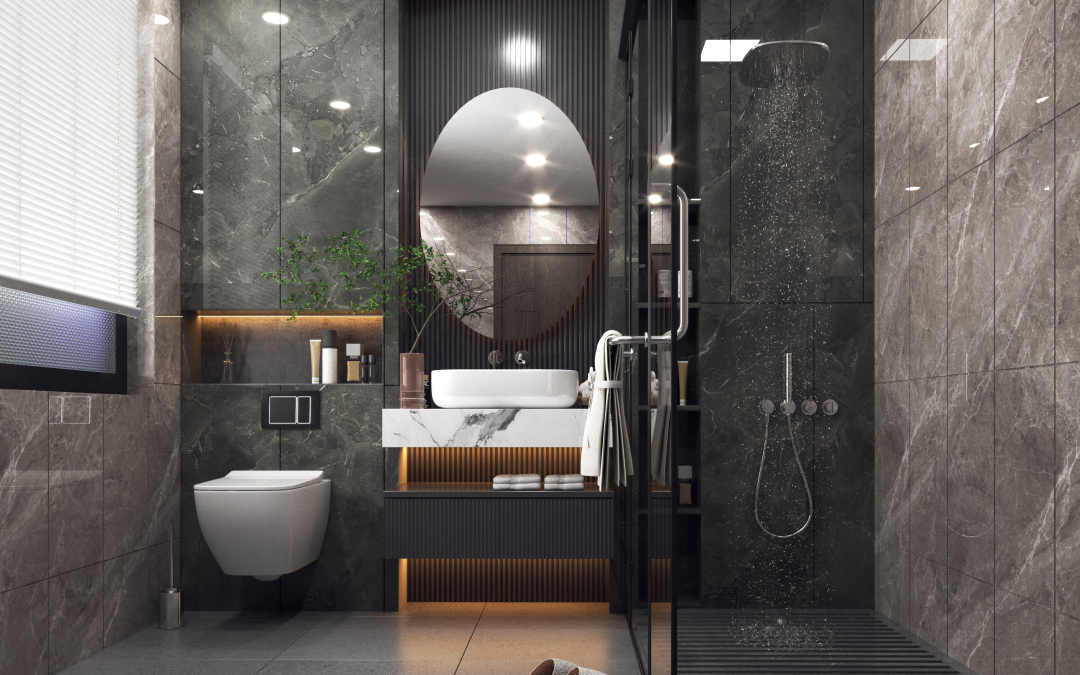
Maximising Space in Small Cape Town Bathrooms: Practical Renovation Ideas for 2026
Many Cape Town homes — from City Bowl apartments and Southern Suburbs cottages to townhouses across the Northern Suburbs and Boland — have compact bathrooms. Limited floor area, awkward layouts, inward-swinging doors and older fittings can make these rooms feel cramped and hard to keep tidy. A well-planned renovation can change that dramatically without needing to move walls.
In 2026, the focus for small bathrooms is on clever use of every centimetre, visual continuity, and finishes that are easy to maintain in Cape Town’s coastal and winter conditions. Homeowners are prioritising walk-in showers, floating vanities, large-format tiles, and thoughtful storage so the room feels larger, works better daily, and still looks current. Here are practical strategies that consistently deliver results in Western Cape homes.
Start with Layout and Flow
Before choosing tiles or taps, examine how the room is used and where the existing plumbing points sit. Moving a toilet soil pipe is usually the most expensive change; moving a basin or shower is often more straightforward. Plan around the fixed points where possible.
Door swing is another high-impact decision. An inward-opening door can consume a surprising amount of usable floor. Rehanging it to open outward, or switching to a sliding or pocket door, frequently frees valuable space at low cost. In very tight rooms this single change can transform usability.
Keep the walkway clear. A linear arrangement — vanity along one wall, toilet, and shower at the end — often works best in long, narrow bathrooms common in older Cape Town stock. Avoid placing a deep vanity opposite the toilet if it creates a pinch point at hip height.
Choose a Walk-In Shower Over a Bath
In most compact bathrooms, a full-length bath takes up disproportionate space for the frequency of use. Replacing it with a well-sized walk-in shower or wet-room style area usually improves daily function more than any other single change.
A fixed clear glass panel or minimal screen keeps sightlines open. Level or low-threshold entry improves accessibility and removes the visual barrier of a high bath side or tray. Recessed niches for bottles eliminate the need for free-standing caddies that clutter the floor. Linear drains along one wall allow cleaner falls and a more continuous floor surface.
Proper waterproofing and correct floor falls remain essential. In a small room there is less margin for error — water that does not drain properly quickly becomes a maintenance problem.
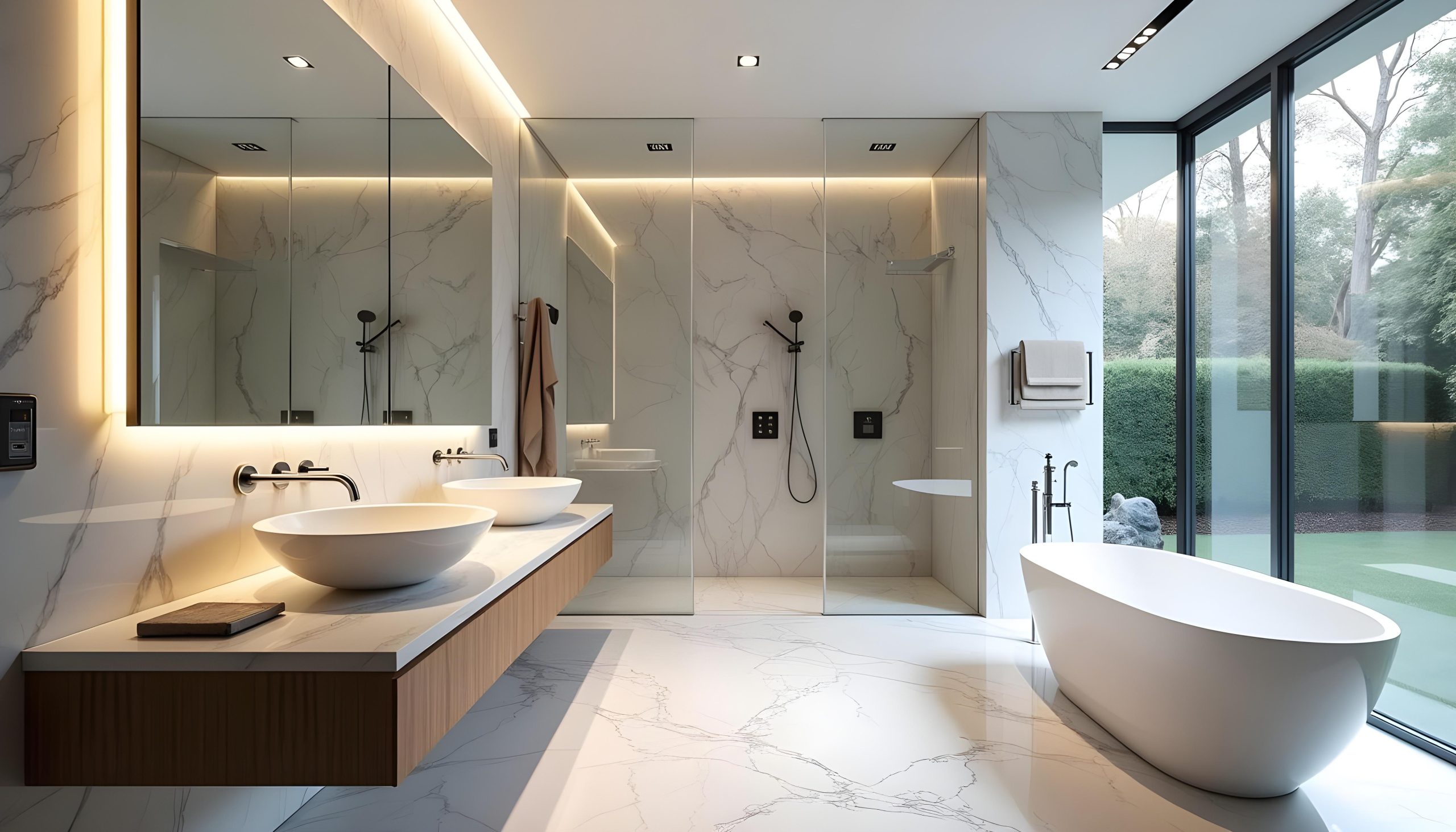
Use Floating Vanities and Wall-Hung Fixtures
Wall-hung (floating) vanities remain one of the most effective space-enhancing choices. By leaving the floor clear underneath, they make the room feel larger and simplify cleaning. Slim-depth units (around 400–500 mm) work well in tight spaces while still offering useful storage.
Pair the vanity with a vessel or undermount basin according to preference and storage needs. Soft-close drawers and integrated organisers keep everyday items tidy and off the counter. In very small rooms, a wall-hung toilet with a concealed cistern frees additional floor area and creates a cleaner line.
Handleless or discreet hardware keeps the elevation simple and modern. Warm timber-look or matte finishes currently feel more current than high-gloss white and hide fingerprints better in daily use.
Create Visual Continuity with Tiles and Colour
Large-format tiles (600 x 600 mm, 600 x 1200 mm or larger) reduce the number of grout lines and help the eye travel further, making the room feel more expansive. Using the same or closely related tiles on floor and walls increases this effect. Light or warm neutral tones — soft off-whites, taupes, light greige or gentle sage — bounce light and avoid the closed-in feeling that dark colours can create in small spaces.
Matte finishes are practical in Cape Town bathrooms: they show fewer water marks than high-gloss surfaces and suit the warmer, more natural aesthetic favoured in 2026. Continuous flooring that runs under the vanity and into the shower zone (where waterproofing allows) further reduces visual breaks.
A large mirror above the vanity, ideally running close to the full width of the unit or even wall-to-wall in very narrow rooms, reflects light and expands the perceived space. Mirrored cabinet doors add storage without projecting into the room.
Add Smart, Recessed Storage
Clutter is the enemy of small bathrooms. Recessed niches in the shower walls keep bottles off the floor and look intentional. A shallow mirrored cabinet or recessed wall cabinet above the toilet or beside the vanity provides closed storage without eating into floor area. Open shelves should be used sparingly — too many can make the room feel narrower.
Built-in power points inside drawers or at the vanity for hairdryers and electric toothbrushes reduce counter clutter. Soft-close hardware and good organisation systems make a noticeable difference to how the room feels to use every morning.
Prioritise Light and Air
Natural light should be maximised where possible. Keep window treatments minimal. For artificial light, combine good task lighting at the mirror (ideally shadow-free) with ambient ceiling light. In smaller rooms, a single well-placed light source can feel harsh; layered lighting improves both function and atmosphere.
Ventilation is critical in Cape Town’s damp winters. An adequately sized extractor fan, preferably on a timer or humidity sensor, prevents moisture lingering and protects finishes. Without it, even a beautifully renovated small bathroom can develop mould problems.
Materials That Work Hard in Local Conditions
Select tiles, adhesives and grout suitable for wet areas and coastal exposure where relevant. Slip-resistant floor tiles improve safety. Quality large-format porcelain offers durability and lower maintenance. Fixtures in matte black, brushed brass or champagne gold tend to age more gracefully than cheaper plated finishes in humid or salt-air environments.
Water-efficient shower heads and mixers deliver a good experience while reducing consumption — a practical consideration in the Western Cape.
Realistic Expectations for Small Bathroom Projects
A focused renovation of a compact bathroom can often be completed in a few weeks once materials are on site, though hidden issues discovered during demolition (old waterproofing, damaged substrates or plumbing problems) can extend the timeline. Clear communication, a written scope and a modest contingency help manage expectations.
Many homeowners choose their own tiles, sanitaryware and taps. Professional installation of the structural elements, waterproofing, falls and finishing remains the foundation of a result that lasts and continues to feel spacious.
Final Thoughts
Small bathrooms in Cape Town homes do not have to feel compromised. Thoughtful layout, a walk-in shower instead of a rarely used bath, floating fixtures, continuous large-format tiles, recessed storage and good lighting and ventilation can make a compact room feel significantly larger and far more pleasant to use.
The goal is not to copy every current trend but to solve the specific constraints of the space while choosing finishes that perform in local conditions. When planning and technical execution are sound, even a modest footprint can deliver a bathroom that feels modern, calm and practical every day.
Bathrooms Cape Town specialises in complete bathroom renovations and new installations across Cape Town and the Boland. With more than 10 years of project management experience, the team handles demolition, plumbing, waterproofing, surface preparation, ceilings and finishing. They can work with products you select or offer practical suggestions on layout and durable finishes suited to Western Cape homes. Quotations and advice are free.
If you are planning a small bathroom renovation or remodel in Cape Town or the surrounding areas, contact Bathrooms Cape Town for a free site visit and quotation. A well-planned project can turn a cramped room into one of the most functional and enjoyable spaces in the house.